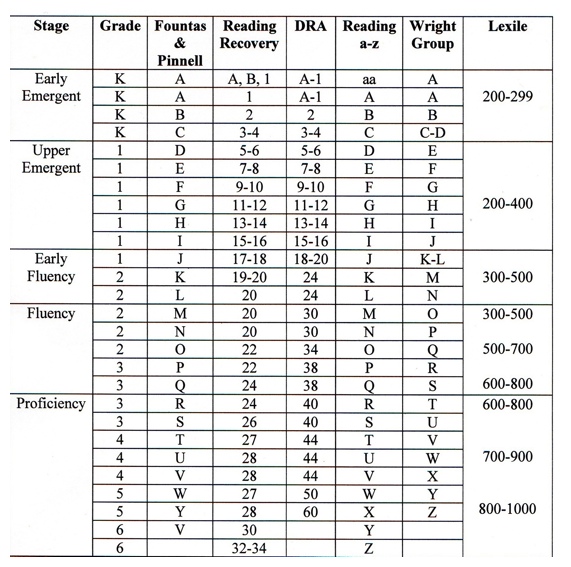
Despite the popularity of leveled reading instruction, there's a real possibility that it will become a one-size-fits-all instructional method that doesn't really fit anyone. When students with very different instructional needs--but who have similar quantitative data on reading analyses--are grouped together and taught as though they all have the same needs, it can easily turn into a time in which none of them receive the instruction they actually need. Furthermore, leveled readings often fail to take into account what will actually interest the students reading these texts, and particularly students who are reading below-grade-level. When a third-grader is asked to read a highly repetitive book with little plot and no character development, it is little wonder that s/he becomes frustrated and bored; and when a child is denied access to a text simply because it is beyond his/her reading level (but would, in all actuality, be within reach with help), it seems counter-intuitive: why would we ever discourage reading? As Kath Glasswell and Michael Ford discuss in their article, "Let's Start Leveling about Leveling" (2011), the Wisconsin Department of Public Instruction has developed a model of reading that identifies 100 possible combinations of factors to which children may be exposed while reading: 5 major reader factors (motivation, subject knowledge, background experience, vocabulary, and purpose); 5 major text factors (content, format, concepts, organization, and author's purpose); and 4 major contextual factors (physical setting, activity, outcome, and emotional climate) (pp. 209-210). With all of these factors to keep in mind, how can we possibly expect leveled reading to effectively guide us? Especially in light of Glasswell and Ford's assertion that leveled reading: 1) oversimplifies text selection (by focusing on oral reading accuracy to match students to texts), 2) overly complicates text selection (which should be focused on providing students with materials that they're able to read), 3) results in teaching to levels, not to needs, 4) targets progress without aiming for proficiency (looking for results, rather than to catch a student up to his/her peers), and, 5) has the possibility to limit students' exposure to stimulating, challenging, and grade-appropriate learning (pp. 209-214). Yet despite these objections, it can be quite detrimental for students to struggle through books that are too difficult for them, or to be bored to distraction by texts that are too easy, and--in theory, if not always in practice--leveled reading is supposed to remove that possibility. When treated as guidelines rather than as the final word on the matter, leveled reading can be a helpful tool to give parents and instructors both a general idea about what sorts of books may be suitable for an individual child...but it's important to remember that they
are "more like 'guidelines!'"

No comments:
Post a Comment